Taman Iskandar Muda Rejects PoD Andaman Block, Urges ESDM Minister to Revoke Tangkulo Field Approval
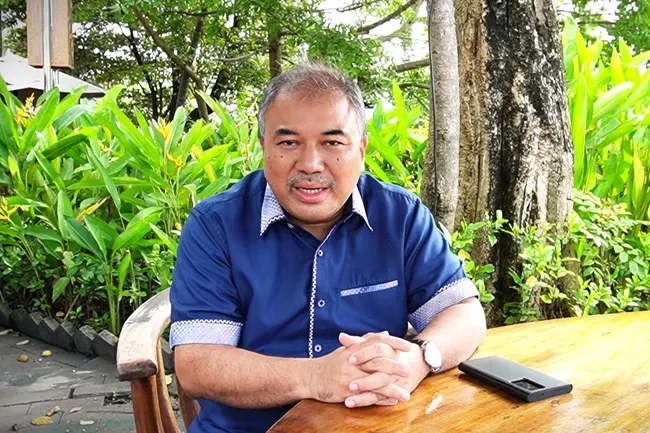
Tangsellife.com - The Central Management of Taman Iskandar Muda (PPTIM) has expressed objection to the decision of the Minister of Energy and Mineral Resources (ESDM) Bahlil Lahadalia, who has approved and signed the Plan of Development (PoD) I for the Tangkulo Field in the South Andaman Block.
PPTIM considers this decision to disregard the aspirations of the Acehnese people and the Aceh Provincial Government, who had previously requested that the PoD approval be postponed until a more comprehensive agreement is reached regarding the management of oil and gas resources in the region.
PPTIM Requests PoD Approval Be Revoked
The Chairman of PPTIM, Muslim Armas, revealed that his organization obtained information that the PoD I for the Tangkulo Field document had been signed by the Minister of ESDM on March 9, 2026.
According to him, this decision should not have been made before a thorough discussion with the Aceh Provincial Government regarding the management scheme and benefit sharing from the oil and gas project.
“PPTIM strongly rejects the PoD I for the Tangkulo Field in the South Andaman Block that has been signed by the Minister of ESDM Bahlil Lahadalia. We request that the letter be revoked, canceled, or revised,” said Muslim Armas in his statement in Jakarta.
He also urged the government to open up data and calculations related to the revenue sharing scheme so that the oil and gas management process is transparent and accountable.
Offshore Gas Processing Deemed Less Beneficial for Aceh
One of the main points of PPTIM's objection is the plan to process gas through floating facilities, namely Floating Production, Storage, and Offloading (FPSO), offshore.
According to Muslim, this scheme is considered not to provide maximum economic impact for the Acehnese people compared to if the processing were done onshore.
PPTIM argues that onshore gas processing has the potential to create wider employment opportunities, stimulate downstream industry growth, and provide a multiplier effect for the regional economy.
Furthermore, the investment costs for offshore processing facilities are considered higher compared to utilizing existing infrastructure, including the Arun Refinery area in Aceh.
Highlighting the Andaman Block Revenue Sharing Scheme
PPTIM also highlighted the revenue sharing amount, which is considered unfavorable to the region.
They assess that the high investment and production costs in the FPSO scheme could result in a small portion of state and regional revenue from the project.
In its statement, PPTIM mentioned that the circulating scheme shows the state's share is only around 4 percent, while Aceh receives about 1.2 percent of that portion.
Therefore, the Acehnese community organization requests the government to evaluate the revenue sharing scheme to be more in favor of the producing regions' interests.
Encouraging Downstream Industrialization and Aceh's Energy Resilience
PPTIM emphasizes that the gas reserves in the South Andaman Block should be the foundation for Aceh's long-term economic and energy development.
They encourage the central government and the Aceh Provincial Government to use gas resources as a basis for developing downstream industries, increasing investment, and strengthening regional energy resilience.
In addition, PPTIM also proposes the construction of gas engine power plants (PLTMG) to support Aceh's energy needs and the Sumatra region.
“Aceh should not only be an oil and gas granary but also an energy granary capable of supporting regional electricity needs,” said Muslim.
Four Official Stances of PPTIM
In its official statement, PPTIM presented four main stances regarding the development of the South Andaman Block.
First, it regrets the decision of the Minister of ESDM to sign PoD I for the Tangkulo Field despite the Aceh Provincial Government's request for postponement.
Second, it rejects the gas processing scheme through FPSO because it is considered not to provide maximum economic benefits for the Acehnese people.
Third, it encourages downstream industrialization based on gas to strengthen the regional economy and energy resilience.
Fourth, it rejects the revenue sharing scheme which is considered too small for Aceh and requests an evaluation to be more equitable.
PPTIM hopes that the central government will open a wider space for dialogue with the Aceh Provincial Government and various stakeholders before the strategic project enters further development stages.